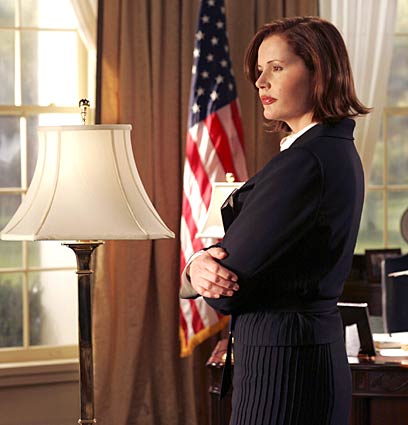
 Tonight played the first of the three last unaired episodes of "Commander in Chief", a show that started out great and then was quickly and astronomically torpedoed by bad decision making at the executive level of television programming. I happened to accidentally stumble upon the episode, because it was so carefully swept under the radar that ABC probably didn't want to make too much of a fuss over the fact that it was on the air at all.
Much has been reported about how "Commander in Chief" went from highest rated and thereby most promising new show of the 2005-2006 season to ratings trainwreck just five months after its premiere. Now, as it slowly crawls toward cancellation, I'm not sure there's much to salvage save for the lesson this taught networks about how easily their own messed up politics destroy potentially good shows. The show was born under the auspices of Rod Lurie (hey, I'm still holding out for "Line of Fire" on DVD), and then he was removed by ABC in favor of Steven Bochco, who apparently had an attitude about how he wanted things done on this show that he hadn't created, and now he's been removed in favor of Dee Johnson (I guess the only person left standing), apparent apprentice of Lurie's and trying her best to restore the show's original look and style.
I stuck with the show from the beginning, and it definitely has its weak spots. After having fervently watched the first four seasons of "The West Wing" over the last three months courtesy of Netflix, I think the bar has been raised pretty high with regards to American presidential dramas. "Commander in Chief" had a lot of potential, but got severely sidetracked with Bochco's warped ninety-degree vision of where he wanted to take it. Lurie's style had an ice-slick and pop edge to it, and the storylines setup for the show were nontraditional and seemed focused more on family and interpersonal relations than inter-White House politics. Bochco came in and lightened the place up, enforced a more episodic structure to the stories, and whitewashed away Lurie's unique style and vision in favor of bland and predictable President-and-Nation-in-trouble stories. Then he mysteriously left, and then Johnson (who'd been with the show since the start) stepped up and picked up where Lurie left off. I think had that first shakeup not happened, it's likely "Commander"'s fate would have been somewhat different. If the show had more room to breathe and another season on the horizon, I think that it could have made up for lost time and started to challenge itself to become a great show. Certainly it looks like that's the direction it's moving in (behaving, almost, as if it doesn't know it's about to end); Donald Sutherland plays his Oval Office-hungry role with such effortless slime that it's almost uncomfortable to watch, and now that Geena Davis has vowed to assert her power against him, it looks like a lot of fun could be had.
I guess the only reason that ABC is airing the last episodes (yanked from the schedule last month for some reality-programming filler) is because they're under obligation to.... but they're certainly going out of their way not to advertise them because the show has become an embarrassment. I would argue so not because of the low ratings, but because of its deconstruction by their own bloody hands. Now it ends very, very quietly during the television-hangover wasteland of June programming.
But wait.... ABC is feeling remorseful? Rumor has it that there is interest in resurrecting the show as a TV movie sometime next season, with hopes that it might rekindle the series under the helm of Rod Lurie again. Strangely, this looks like the makings of basically rewriting Lurie's own The Contender (2000), an excellent movie that obviously spurned the nascent mechanics of "Commander in Chief".... but who knows? Maybe it could give the show another shot.
Wednesday, May 31, 2006
Commander in Chief dies a quiet (and messy) death

Tuesday, May 23, 2006
the season finale as art
With the end of May comes the end of the television season, the summer ahead a wasteland of reruns and trashy made-for-TV filler and the occasional new series launched only so it can fail. I'm starting to get dangerously close to Food Network overexposure, so maybe it's a good thing that I take a break from TV for awhile. I just can't kill my TV or believe that the revolution will not be televised or whatever, so I hold onto it to watch the news in the morning before I go to work. I miss my Mornings on 2, but Lori Stokes on Channel 7 serves my groggy wake-up time just fine.
Last night came the finales of the fifth season of "24" and the series finale of "Alias" at the end of it's fifth season. Both were two hour events, and it was too bad they were staggered over each other. Both shows have traditionally loved to end their seasons with big bangs and cliffhangers and all that jazz, all with the hopes people will talk about it over the watercooler for four months until they return in the fall. 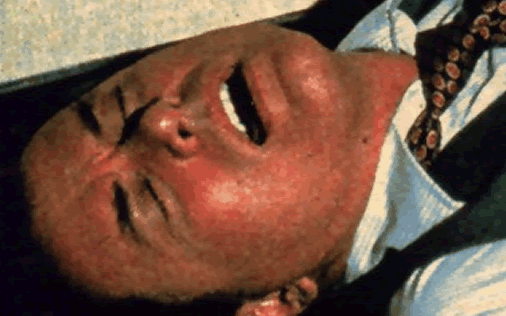 I think it's too bad that all serial shows seem to be stuck with the expectation of ending with shocks and season-spanning cliffhangers.... you can trace this disease back to Patient Zero, the Who-Shot-JR episode of "Dallas" from once upon a time in 1981. I would argue that the impact of the cliffhanger depends on whether or not it comes as a surprise; I think serial television drama is doomed to have an audience always expecting a cliffhanger, and thus the bar gets set higher and higher and demands can never be met. I won't be surprised if a backlash comes from tomorrow night's season finale of "Lost", because the audience is expecting (and to some extent demanding) their shocking how-could-they-do-that cliffhanger, and no matter what they come up with (anywhere on the shock-value scale) some viewers will be let down. You can't please everybody, though, and it's not in a show's best interest to try to. People will keep watching from now to next season anyway.
Alessandra Stanley of the New York Times (hey, last summer I drove her from the Long Island/Islip airport to Southampton.... long story) wrote an interesting article about the art of the season/series finale. I think it's too bad that finales only set themselves up for disappointment, and she makes a good argument about that. I believe that sometimes the best twists or most compelling episodes of television, if written just right, come in the middle of the season.... never the end, never the beginning. The season finale always seems to promise resolution but ends up asking more (and sometimes different) questions, and that's what hooks the audience. A serial television show cannot sustain itself on the same storyline conceit season after season, because the story must develop and evolve away from the inciting incident. Just look at soap operas.... they succeed because the drama is always running high and the story is constantly changing and the characters are constantly involved in different affairs (romantic and otherwise).
The ads ABC is running for "Lost" promise answers to the questions we've been asking all season, or something even more dramatic and tabloid-sounding. The problem: "Lost" is a series based on questions, and everytime something is almost answered, more questions arise in the resolution's wake. I'm afraid "Lost" will suffer a traumatic flame-out when it's ready to end because the questions are by far much more interesting than the answers.... Disappointment lurks around every corner; the audience keeps coming back every week because they are tantalized by the grand mystery, not the answer. Take a look at "Twin Peaks", a series based on the question "Who killed Laura Palmer?" It's clear that the creators (David Lynch and Mark Frost) wanted the show to gently shake this question off and become about the characters in the town of Twin Peaks and their stories; Lynch has stated that if he had his way the question of Laura Palmer's killer would never be answered. The audience demanded the answer, though.... and once they got it (in perhaps the best episode of television ever filmed) they fled. Why? Because their question was answered. Simple as that.
A series based on questions like "Lost" must give answers (but can you imagine if the writers consciously didn't? Now that would be crazy). The writers know, though, that what keeps the audience coming back is the very mystery; they can't lose this. The very concept of the show has an invisible ticking clock resting on its shoulders, though.... the inital story-based conceit is permanently ingrained to whatever story evolves down the line. These people are stuck on an island; their lives have inexplicably intertwined before they even met.... so, WHY? This mystery of theirs will get old sooner or later. This doesn't mean that they can't have great stories along the way, but the writers will need to know to throw away the milk before it goes rancid.
This, interestingly, is an argument for the popularity of episodic television drama like "CSI" and "Without A Trace" and the continuous and seemingly never ending sequence of "Law and Order" spin-offs: there is no long-running mystery and there is no long-term investment. The stories that episodic dramas tell do not span outside their single episodes; the answers are promised and revealed week after week. This format can be extended just fine into the two-parter (with a juicy cliffhanger at the end of Part One; for an example, see almost every season finale of "Star Trek: The Next Generation"), because the tension is amped up, and the answers nonetheless are still promised and delivered.
Now the specifics: "24"'s finale wanted so badly to shock that the "shock" was not really shocking. In fact, they played it like the audience forgot that Jack pissed off the Chinese government in Season 4 and was wanted by them. Now that Jack is in the cargo hold of some freighter bound for Shanghai (not a pleasure cruise), the questions remain high for the next season of "24". I'd be hopeful.... except that every other time the show has left its season with a cliffhanger, the following season seems to be like a strange series reboot. More often than not, the high drama of the cliffhanger never gets a payoff and remains secondary or sometimes practically forgotten; the everyday pedantics of the show require more action than story (at least how they've played it off as of late), and that's too bad. I just hope that the writers and producers of "24" know that they would have a really incredible show if they just sat down and made a plan for it instead of writing by the seat of their pants (like they have mentioned they do in past interviews). This season finale promises big questions about Jack's fate with the Chinese, but I wouldn't be surprised if we start up Season 6 with all that explained away off-camera.
"Alias"'s series finale was a nice swan song, bringing back characters of old and doing a nice bow-tying intercutting flashback wrap-up from before the action of Season 1 ever began. This show was so good in its first two seasons, but then completely lost control in Season 3 and never could get the reins back. It fell prey to sloppy writing and confusion of its own storyline, and bungled it even more come Season 4 in a strange evolutionary retreat. All that flip-flopping concerning Sloane (he's a bad guy, no, wait, he's a good guy, but wait, is he good? No, he's bad), the gaping missed opportunity with Vaughn's wife Lauren, and the contrived inclusion of Syndey's long-lost sister.... all too much. So, by the time we reach the great answers of Rambaldi in this series finale at the end of Season 5, I'm not so sure I care anymore. That said: Jennifer Garner is still on fire, and has quite a career in front of her. Lena Olin is perhaps the hottest woman in film or TV over 50. I'm glad that they remembered that Sydney's mom is bad to the bone.... it would have been a bit unsatisfying to see the Mom become some kind of good guy. Besides, the show has always been at its best when Lena Olin was there to play the Mom (and I think the writers know that), so it's only fitting that she and Sydney get to duke it out before series' end.
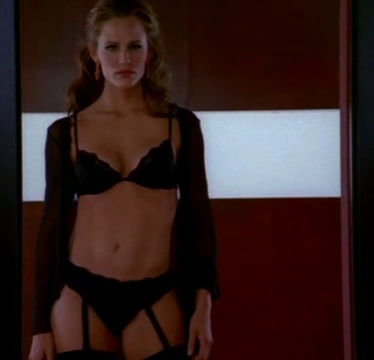

So, after "Lost" is over tomorrow night, the television-free summer awaits me. We'll just see how long I manage that.
Friday, May 19, 2006
Cody's Books on Telegraph shuts their doors
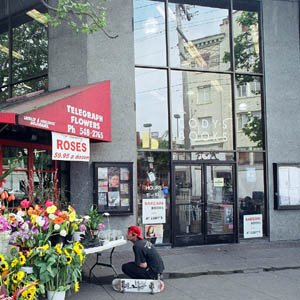 I'm not of the reporting type, so this isn't a news flash or anything. That said, it's a sad day for lovers of independent bookstores in the Bay Area.... Cody's Books announced last week that they were closing down their store on Telegraph Avenue in Berkeley.
This isn't the demise of Cody's as an institution though.... apparently they're prospering just fine with their stores down on the posh Fourth Street strip and at a scrubby new locale in downtown San Francisco. The sad part is that Cody's is a Berkeley institution, an massive oasis of books and magazines amidst the grungy one-of-a-kind fervor of Telegraph Avenue. I was never down by Fourth Street for any reason (the bus took too damn long to get there, and that location always feels strangely deserted), so the Telegraph store was the place to go. This is certainly one of my favorite places to peruse books of all kinds (not only do they have an impressive collection of fiction and short story anthologies and lit mags, but also a film theory section that's yet to be matched by my eyes); the selection that they have just can't be found at Barnes & Noble or Borders. That, and it's one of the only places I know that still carries new issues of Wrapped in Plastic magazine.
What exactly has become of Telegraph Avenue as Berkeley's main drag? Business have started to jump ship over the last three years, and no matter how many American Apparels you open up, it feels like something's gone missing. If anything, Cody's is one of the last bastiens of Berkeley's literary culture, and now that it's being plucked from the university's periphery the town is being depleted of a much-needed asset. Who wants to trudge down to Fourth Street to see quality readings? Even that nice flower stand, a fixture outside of Cody's, will likely crumble in its absence. It won't, however, affect the business of that guy who sells patches from those giant plastic bins in front of Amoeba Music. Without a strong bookseller near the university, the legacy of Cody's is left to the masses in downtown San Francisco (I'm not sure they can maintain the same charm when setting up shop next door to the Virgin Megastore) and the yuppie/hippies (or "yippies".... thanks Josh) of the bourgeois North Berkeley Chez Panisse Sunday brunch crowd.
I'm sad to see it go.
Saturday, May 13, 2006
star perks at starbucks
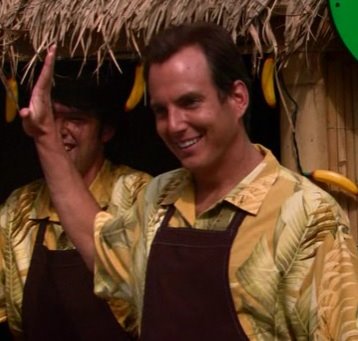 This afternoon I was at the Starbucks on Chambers Street and West Broadway when this guy rolled on up on his bicycle, caught eye contact with me through the window and then looked away awkwardly, waltzed into the Starbucks to grab his venti frappuccino of some kind, and then waltzed back out and zoomed away up the street from whence he came on his bicycle.
Did I miss something? He was literally indoors for thirty seconds, tops. Did he call ahead and place an order or something? Can you even do that at Starbucks? Clearly he has an in with the barista staff. Maybe one day I can avert public attention by making advance pick-ups at Starbucks via bicycle.
Friday, May 12, 2006
the best of contemporary american literature
What would you say is the best work of American fiction published in the last twenty-five years?
This is a question the New York Times thought they'd try to answer, and with a list of 125 writers and essayists and critics, they posed the question: what is the single best work of American fiction published in the last twenty-five years? Accompanied with a very readable essay about the survey and its results, they listed the twenty-or-so novels that came back with the most hits. But the top five collected more votes than all the rest:
Beloved, Toni Morrison
Underworld, Don DeLillo
Blood Meridian, Cormac McCarthy
Rabbit Angstrom: The Four Novels, John Updike
American Pastoral, Philip Roth
I would consider anything in the last twenty-five years to be "contemporary" literature, but I'm no literary scholar or critic. So, are these novels (and, by association those that qualify for the best American fiction of the last twenty-five years) contemporary literature? By "contemporary" I'm not referring to a style or mode of writing (although it can be argued that there is one to describe this tag), but rather a temporal association. I guess my definition of "contemporary" is fluid, changing as time changes, leaving behind what once was contemporary to bring new members to the team. Maybe my perspective on this will change one day. It's probably no surprise that Beloved is coronated with the title as the best work of American fiction from the last quarter century. It seems already so quintessential to American literature as a whole; it is thoroughly engrained in our minds as lit canon. As it should be.... it's a virtuoso whirlwind of weirdness and beauty and love and fear and all that other crap that I can't explain without reducing it to something that it's really not. That, and I think it's an important novel to read (something I can't say of the Updike/Roth group.... but more on that in a bit). I must admit that I find her writing sometimes to be super-dense, and I get thrown off the wagon too easily when she goes off on some tangent that I wasn't able to pick-axe into.... but I don't wane in my confidence of her writing. I remember once I was in a group of people talking about books (probably all with wine or Brooklyn beer in our hands), and everyone was talking about which author does this and which author does that, all of us dropping lit names here and there. I made some comment about how Morrison manages to do some strange ethereal stuff in her fiction that's so hard to do, and one of the people in the group looked at me blankly: "Morrison who?" they asked. Morrison who?! Has Toni Morrison not earned the right to be referred to by last name only, like we do all the greats like Faulkner, Fitzgerald, Joyce, Steinbeck, etc etc etc? Maybe it's because she's still living (but, we refer to Marquez as Marquez....), maybe it's because her work is still too fresh in our minds.... but if you don't know who Toni Morrison is, you've got some reading to do.
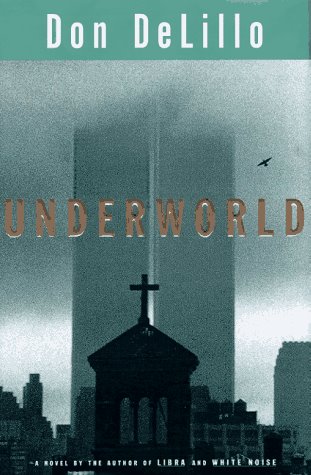 I've always wanted to read Underworld, but have been scared off too easily because it's so damn massive. Let's keep in mind that I'm in no way a fast reader; Underworld will literally take me a month or two (conservatively) to read. White Noise is perhaps my favorite novel (and probably would be my pick for the best-in-the-last-25-years list), so I know DeLillo's got the chops.... but a 900 page book is quite a commitment. I thought once that I'd try to tackle David Foster Wallace's much-beloved (no pun intended) Infinite Jest, clocking in at well above 1200 pages or so (right?), but couldn't manage to crack the first fifty.... I think that book might be a casualty betraying the maxim "less is more". I've heard that Underworld is fantastic novel, but it's the kind of book you need to duct tape to your hand in order to really get into it. Somehow that reminds me of the mythic "Edward 40-Hands" college parties, were people duct tape 40s of beer to their hands and can't do anything until they're finished. Ah, college parties. Chances are they'd be less wild if people were duct taping books to their hands instead.
 Blood Meridian is near the top of my little summer reading list, and I've always had strong interest in reading it but haven't gotten around to it yet. I must admit that I want to get to the gruesome parts (as mentioned by most people if the topic ventures to Blood Meridian), but because I've heard nothing but praise for it, it's next on my list. I first learned about Cormac McCarthy's work in a writing workshop I took a few years ago; during a class discussion, the woman sitting next to me spat acid on the work of Charles Frazier (author of Cold Mountain, a book I have not read, although the movie that is based from was not as good as I wanted it to be).... she said that Frazier blatantly ripped off McCarthy's work, and that McCarthy is not as well-praised as he should be. But.... look who's work has stood the test of time the best. Frazier's just gonna have to be happy with that National Book Award of his.
So, am I the only one who is not so in love with John Updike or Philip Roth? I find their works to be bloated and sometimes dripping with self-importance, as if they knew while they were writing that their works would be held as top achievements and would grace lists like this one. I think that's the largest strike against them in my opinion.... the stories that they tell are just fine and worth telling, so these guys are not being heralded for no good reason. That said, I don't like reading works where the author holds himself at a higher standard than his reader (sorry Nabokov and Pynchon, I think you guys are in this category too); it seems like they're trying to one-up the reader or establish a barrier of knowledge and worthiness, setting themselves at a higher standard than the audience that they're trying to attract.
The list has quite a few excellent selections (namely short story collections like Jesus' Son by Denis Johnson and The Things They Carried by Tim O'Brien), and a strange affinity for all things Philip Roth. It seems where Roth's never-ending stream of navel-gazing novels ring a bell with the group of 125, Joyce Carol Oates' poisonous proliferation has shot herself in the foot. I'm not going to make any statements about "how dare they leave off this!" or "how can they trust that!" because this list is in no way trying to pretend that it's not subjective. It just seems to be an interesting cross section of American literary minds and what they deem as important literature today. Chances are the list would look quite different if asked five years from now, or even five years past. Read the essay.... see what you think.
Monday, May 08, 2006
prison broke
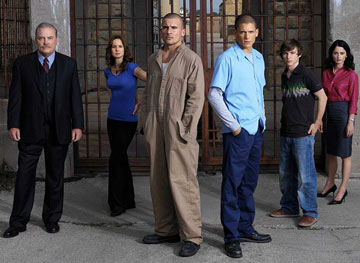 Tonight on "Prison Break", the show followed through with what the title has been promising all season long. This episode happened to be the second I have ever seen after last week's, so I'm new to the show.... What can I say? It comes on right before "24".
Judging from two late season episodes, the show has many diverging serial plots (brownie points) and definite forward momentum. I'm not sure of the background and setup really, but the main character (played by Wentworth Miller, last seen as a younger Anthony Hopkins in The Human Stain (2003), and who looks like he's twelve years old) wants badly to get his brother out of jail, to the point where he got into the jail in order to get the brother out. I'm guessing somewhere earlier in the season the lawyer subplot spun into something that now seems mob-related (with the lawyer played by Robin Tunney.... hey, she was in The Craft!). There's some political intrigue too that appears not to have any correlation to the prison story; the vice president (Patricia Wettig.... hey, she was in "thirtysomething"!) is apparently being forced out of office, and some inside operative (Michelle Forbes.... hey, she was Ensign Ro!) is trying to make sure she does so without causing a fuss. Not sure where they're going with that story.... it's interesting, but gets maybe four or five minutes of total screentime.
Of course the story is action-packed; at least now it is, because they're actually breaking out of prison. I'm not so sure how my attention would have been kept earlier on.... the acting is particularly wooden and unconvincing from some of the principal characters, which makes the show more laughable than provoking. Certain storytelling techniques also seem to creak and sag with contrivance, for instance the unfortunate trashy multiple flashback sequence at the end of last week's episode, and the even trashier zoom smash cuts when going to commerical. The inevitable nail in the coffin: apparently Brett Ratner, self-annointed auteur, is a producer.
Television shows (mostly serial, but not limited to) are resolutely designed around a single event; the story develops from this event, the characters change and evolve based on this event, and the show is allowed to take off in different tangents and become something else entirely as it moves forward. A show like "Prison Break", though, works in the opposite direction.... the event this show is planned around is to come in the future, not an inciting incident from the past. The point of the show is to break out of the prison, so what happens once that mission is accomplished? Can a show still continue forward when the original conceit (and the title, after all) no longer applies?
Now the gripe: Isn't there something inherently wrong about planning an entire series around one future event? The idea being, once that event happens, the show is finished.... ah, but we know this is usually never the case, as networks sometimes continue shows past their expiration date ("NYPD Blue", anyone?). If a show like "Prison Break" is a wild success, then what to make of it once they actually break out of prison? This is a question the writers and producers are trying to answer for themselves right now, as the second season dawns in the visible distance.
Now the question: Why are networks greenlighting shows like this in the first place? Also this TV season came "Reunion", which I have not seen, which had a similar one-season-only conceit but got unmercifully axed before it could tie up its loose threads. Isn't it reckless to go ahead with a show that can't be seen as carrying forward a couple seasons down the road? Don't networks want to invest in their programming? Imagine the handful of other really good serial shows that were turned down for one-season experiments like this. People could make an argument that "24" follows in this pattern, although I disagree. I do admit that "24" has branched into a strange and somewhat disappointing form of season-long episodic-ness, but it doesn't promise to end it's conceit just because twenty-four hours have run out.... there are always twenty-four hours in future days, but not unlimited prison breaks.
One more episode of "Prison Break" left, and then next season...?
Wednesday, May 03, 2006
Lost: television bloodbath 2006
I don’t even know where to begin with this one. I don’t watch as much television as it seems I may, but the TV I do watch seems to get a rise out of me.... as all great storytelling should, right?
So, if I don’t gripe enough about “24” blowing away their entire cast one-by-one, tonight’s “Lost” decided to go two at a time. This is another visible example of how
trigger-happy television shows have been this season, a weird trend if you ask me. Because all five of you that read this are likely not dedicated to “Lost”, I’ll put a humble SPOILER WARNING here, with the caveat that reading on will reveal why I must gripe about the unfortunate circumstances around the two characters that happened to bite the dust. Oh, and I’ll complain about how this flirts with sloppy writing and evidences further that the writers of “Lost” just might be flying by the seat of their pants.
Now don’t get me wrong: I’m all for the death of a main character in a serial television show as long as it is 1) surprising, and 2) challenging to the story. I’ve already vented steam about how “24” religiously does not do this as of late, and thereby is not as well-written as it could be. “Lost” is a different beast though, and the finale of tonight’s episode was gutsy and disturbing. Usually the more random and unsettling deaths of main characters hit home the hardest (everyone, look to the paragon of television serial drama that is “Twin Peaks” to back this up).... Tonight, Ana-Lucia (Michelle Rodriguez) and Libby (Cynthia Watros, who is still on my dream TV cast list) both got shot in the gut, and yup, we watched their last breaths (which was terrifying, I’ll admit) and watched them die before our eyes. Always important to have the pan-shot over the dead body for the viewer to be assured that the character is dead (Ana-Lucia, check; Libby, check)*.
Okay, so why kill these two characters? We were just starting to get to know them. Looks like real life might have played a role in this one: Both Rodriguez and Watros were arrested last December for drunk driving, and this snafu probably spelled u-n-p-r-o-f-e-s-s-i-o-n-a-l to the producers, and they set their crosshairs on the characters. Fans were already turned against Ana-Lucia when she shot and killed Shannon (an underused and thereby useless character, à la Edgar in “24”), so her departure is probably a godsend to many fans. But Libby? Oh writer/producers, what have you done?
Well, about a month ago (only two episodes ago) they decided to pull a wicked reveal that connected Libby in flashback to other characters in a challenging and satisfying way. We know little of her except she’s a clinical psychologist.... and the reveal showed us (from an omniscient POV, rare for “Lost”’s flashback-heavy character-centric episodes) that she spent some time in the loony bin too. But now Libby, who was just getting interesting, is dead.... meaning that loony bin reveal has been wasted! Bad writers, bad! You completely tarnished that plot twist, the most satisfying this season until.... well, tonight’s. But, my point being: perhaps the writers had this cool Libby-backstory idea before they decided to kill her off, thus wasting an opportunity to complicate the story through her character. With her dead, how will that awesome reveal from two episodes ago ever pay off? It won’t. The same can be said of interconnections set up in the backstories of other axed characters (Shannon, for instance), which all lead to nowhere when we don’t have the character there to make the connection for us. Dear Writers of Lost: do you have an exit strategy planned for this show? Because at times it seems like the emperor doesn’t have any clothes.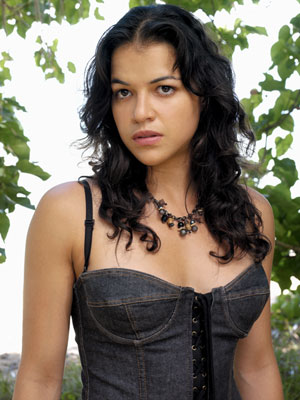 Okay, about Ana-Lucia. Was I the only one who actually liked her? They gave us an unlikable character who had a mountain to cross with the other characters, and they seemed to be doing a good job of integrating her tough-girl exterior into the fold. But, instead of taking the challenging route with her character and exploring further tensions with her, she gets popped. This was an out for the writers, an easy way to dispense with a character that the fans apparently didn’t like and an actress who was rumored to be causing problems on-set. Regardless of whatever on-set chemistry was going on, her character had more depth than quite a few of the gaggle of other whiny characters who are still sticking around. Now she’s done with, and the viewer gets no more.
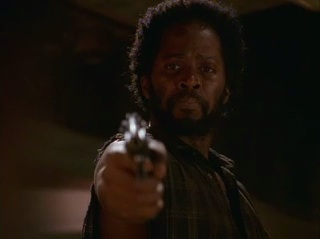 I’m not so sure my mind can be changed regarding killing off Libby, but the writers did ultimately succeed in fulfilling the two requirements above about killing main characters. I was absolutely floored, so the surprise was there. How does this challenge the story? Michael, fresh from a many-episode hiatus at the Others’ Club Med off-screen somewhere on the island, takes a sinister turn as our bad guy murderer. He betrays Ana-Lucia outright, and finishes Libby off because she was in the wrong place at the wrong time. By framing the captured Other the good guys have for these murders, it seems like Michael’s turned to be a bad guy now. Of course, this now limits his tenure on the island. BUT: This is a great reveal and justifies at least one of the deaths (sorry, Libby's death is a waste and thereby not justifiable.... so, why not take out that whiny hobbit Charlie?). The viewer knows Michael’s turned, but none of the characters do.... and thus the story is forced to change and evolve based on this reveal. This is challenging writing and presents a new course of obstacles for the characters ahead, and raises the bar for the writers. Let's hope they can make the grade.
But, why kill off two characters played by actresses that were just hired at the beginning of the year? Obviously some kind of shake-up was in order. Unfortunately, it kind of cheapens the whole tail-section-meets-the-rest-of-the-survivors arc. I was hoping that those rumors that Cynthia Watros has landed a role in a pilot picked up for this fall were just bunk. Apparently not. And what will become of Michelle Rodriguez? At least her character got to have some steamy sex on the island before her time was up. I for one will miss her. In the end though, this episode packed a powerhouse wallop that completely blindsided me, and made for some great television. I’m just not sure how I feel about the results quite yet.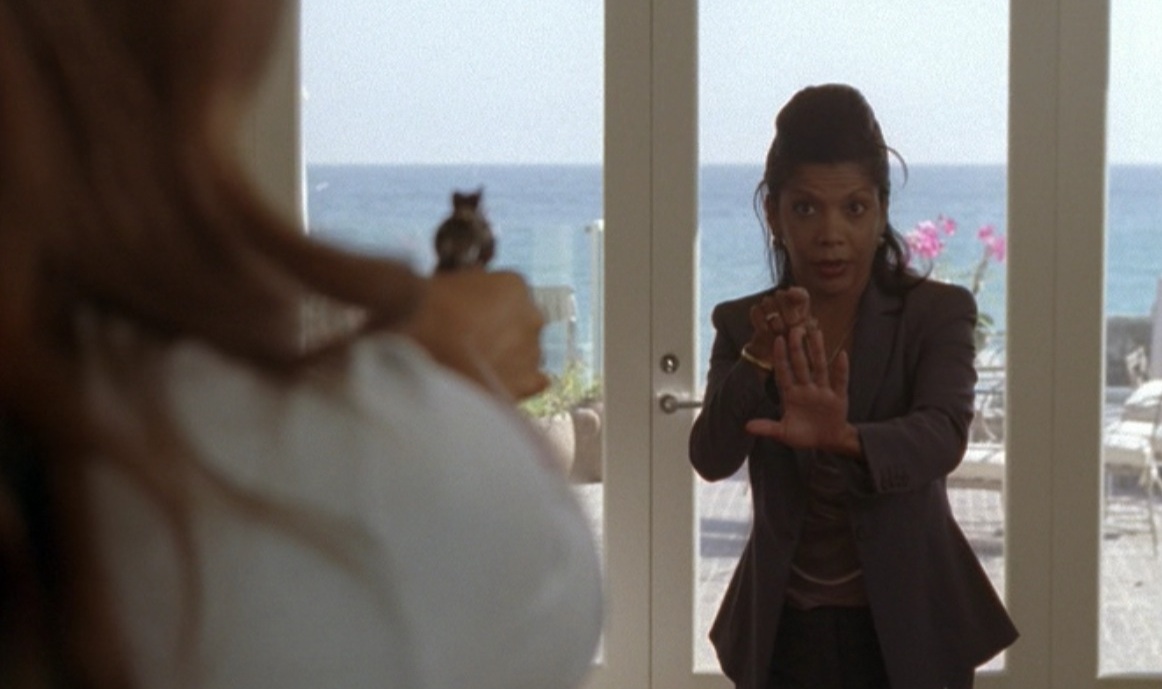 *yes, a footnote: when “24” decided in their third season to kill off the two greatest villains they’ve ever had and probably ever will have, they didn’t abide by the pan-over-the-dead-body shot when Sherry Palmer got two bullets in the gut (interesting parallel to the recent “Lost” axe-ings here). It doesn’t matter if she wouldn’t be able to survive the shooting in real life, but by television rules the viewer has to have visual evidence that the character is dead, and all we got with Sherry was to watch her get blown backward onto the floor. The camera conspicuously panned away quickly, and that was it. So, writers of “24”, do yourself a big favor and bring back Sherry to knock our socks off. You left that window open….
Saturday, April 29, 2006
more reasons for a Healthy Appetite
 Just when you thought the Food Network had sold its soul to the reality television devil (I'm talking to you, "The Next Food Network Star"), along comes the first bit of watchable original programming in quite awhile: "Healthy Appetite with Ellie Krieger".
Ellie who? Well, the Food Network has certainly saturated their commerical air time with her.... she's young, she's sexy (threatening to perhaps dethrone Giada "Food Babe" DeLaurentiis?), and she loves chocolate.... and entreats you to call the food police as she unwraps the foil of her chocolate bar.
The pitch? Looks like she's found the holy grail of cooking healthy.... yeah, yeah, she's a nutritionist, but she knows how to cook things that are good for you without removing the tasty stuff that is usually not so good for you. She's not cutting corners, and she tells us so: Hence, we have episodes where she's making triple chocolate cookies (without the usually nasty "good for you" fillers in chocolate baked goods like bananas) and scrambled eggs with avocado and buffalo chicken fingers with blue cheese dressing. She uses butter and mayonnaise. Bottom line: I salivate.
She's got a sexy coolness that is a refreshing reprieve from the high-on-diet-pills energy of Rachael Ray or the hedonistic butter psychosis of Paula Deen. She talks lovingly about her husband and daughter, sometimes parading the husband onscreen as she fills him with tasty meals. Her show is easy-going, thanks in part to her calm-yet-bubbly voice, and is instructional, thanks to the little tidbits we learn about correct portion sizes and the composition of vitamins in the food we eat. Bookending commerical breaks are atmospheric shots of her walking around New York City, for instance the Starbucks right at the gateway of St. Marks in the East Village, and I imagine myself running into her and following her home where she will make me delicious food. Maybe I'd just say hi instead. Or take covert pictures with my cell phone camera.
Tuesday, April 25, 2006
imagining what I would say if I didn't get the job I wanted
Well, if there were ever an example of what blogs are made for.... it would be in response to something like this:
I just found out who Mark Slouka was yesterday, when I read a little article of his that tries to open a new asshole on the Columbia University writing MFA program. Talk about biting the hand that fed you.
Now, whatever points he brings up that do have merit are lessened dramatically by the fact that he didn't get appointed for tenure at Columbia.... and then decided to sling this kind shit at them. By publishing in the Columbia campus newspaper, no less? Maybe more reputable and high-profile outlets (Harper's, New Yorker, the Atlantic) rejected his catharsis, or maybe he found just the right niche audience to witness his wrath. Who reads the Columbia Spectator than just Columbia students, anyway? He all but spells out the names of the faculty and administration he targets, and he published his angry diary scribblings in a place that these targets all have easy access to.
I'm not so sure that this was perhaps the most professional way to go about expressing his dislike of not getting the job he wanted. He does pinpoint some issues that I think are worth really taking a look at (in part because it seems that maybe no one is talking about them?), but he immediately paper-shreds his integrity by the fact Columbia didn't give him the job. He goes on then to attack former colleagues he believes are not as well-qualified as he is. Is that such a good idea? He's sitting pretty with a tenure-track position elsewhere now, so the comfort of giving the finger to Columbia doesn't come with potential-job backfire. Or does it? How would his current university-of-hire feel if he turned his vitriol on them? Who's gonna pick up this guy's book and be so happy to read him? Probably nobody who graduates(ed) from Columbia. If situations were reversed and Columbia hadn't have burned him, his article would have had more of a lasting impact and probably wouldn't be dismissed as angry rantings. After all, why apply for tenure at a university MFA program where you feel the quality is so crappy? This lessens that impact all the more.
Rick Moody wrote a similar article in Harper's last summer that momentarily set its crosshairs on Columbia's writing MFA program.... but he was referring to the Columbia of the 1980s. I don't have a good idea on how it has changed for the better or worse, but the fact that he threw a hammer at Columbia doesn't look good for it no matter what decade you're writing about. Ultimately, Rick Moody didn't pick up any screaming fans from Columbia after his article, which in my opinion whined a bit too much about how nobody seemed to like him. Harper's ain't a counselors couch, buddy.
But, maybe Slouka's tirade won't be dismissed so soon? Two nails in Columbia's writing MFA coffin so far, and that can't be ignored. Scary to see what happens next....
A friend of mine told me about an essay/interview of Flannery O'Connor's and her response to the burgeoning popularity of writing MFA programs. When prompted about whether or not MFA programs stifle writers, O'Connor responds that she thinks that they don't stifle writers enough, and that thanks to the MFA there's been a nasty showerdrain-clog of bad writing and bad writers out there. Couldn't Slouka have said something like this instead? Flannery O'Connor wasn't pissed that she didn't get a job, though.
Tuesday, April 18, 2006
the great quake of 1906
On this day one hundred years ago, San Francisco was almost completely destroyed by a massive earthquake. This earthquake was no little shaker; at a magnitude 7.9 (the most recent estimate.... I'm not even sure if they use the Richter scale anymore), the epicenter sat two miles into the ocean off Ocean Beach near Lake Merced.  Brick buildings crumbled everywhere (and hence we learned our mistake: not so many brick buildings in California anymore), and landfill-covered chunks of land that used to be part of the bay upchucked and swallowed foundations whole. It wasn't just the earthquake, though: a massive fire came through and destroyed everything that we think of as downtown.... the entire northeastern quadrant of the city burned to the ground.
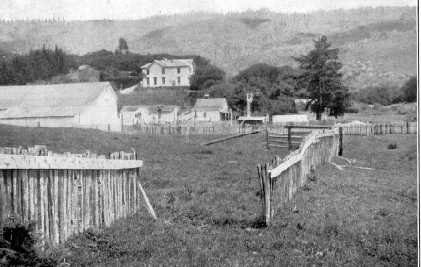 Having experienced a 6.9 earthquake ten miles from its epicenter in 1989 (which, no matter how much they downplay it lately, was a huge m-f-ing earthquake, in its path wiping out all of downtown Santa Cruz for instance), I can tell you that a 7.9 back when buildings were unstable was probably quite an event.... unlike anything seen since then (unless you were in Anchorage in March of 1964; their 9.2 earthquake is the second largest recorded in modern history). In 1989, my house lost a chimney, a big brick hearth, and a window or two. The land splits apart (in some places) and wobbles, and you can hear the corners of the building you're in crack and whine. Aftershocks are pretty intense too. Pretty trippy. I'm in the camp that finds earthquakes more exhilerating than terrifying, but I don't wish any of the destruction or death that comes with them.
The 1906 Earthquake is quite a big deal to San Franciscans, because it still weighs heavily on their minds. It's interesting: in New York City, older buildings are heralded as being "pre-war"; in San Francisco, the older buildings (and usually the most beautiful) are "pre-earthquake". Of course in New York, the buildings weren't destroyed by a war.
I always assumed that I'd be in San Francisco for the centennial celebration of the 1906 quake. For past years they haul out the few really old grannies who were one or two years old during the quake, and have them ring a bell or something at 5:12 am to commemorate the event. Apparently there's a big party in the city today to celebrate the centennial, and it's a bummer that I'm not there to join in, being such a lover of all things San Francisco.... now, having taken a 90° turn, I've ended up on the other side of the country where earhthquakes sound scarier to people than hurricanes or tornadoes.
On a related note, I've been meaning to read 1906 since it came out two years ago, just for the hell of it. It has the potential to be trashy, but it's nice to see San Francisco treated right in the realm of fictional storytelling, other than in some crappy tv shows that shall remain unnamed. They have yet to make a stand-out movie about the 1906 earthquake (correct me if I'm wrong).... it could make an awesome Titanic-style epic...! Are you listening, producers? I'll write it for you.
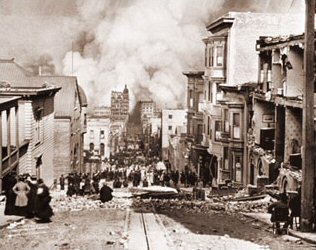 The view down Sacramento Street (again: my old neighborhood!) toward what is Chinatown today.
 Tuesday, April 11, 2006
workshop burnout
I've been taking writing workshops now for almost five years. I'm thinking there's definitely a saturation point where the random feedback coming in starts to tarnish the intentions of the work of writing going out. It doesn't help any that my current workshop tends to be debilitatingly negative (thanks in part to the workshop leader, who manages to turn compliments into negative comments). When I write, I have always imagined the voices of my potential readers giving me feedback.... usually it keeps me in check, but lately it seems to be stopping production. When you have a workshop that's so difficult to please, how can you turn out anything worthwhile to read? It's come to the point where nothing can please them, no matter how hard you try.
All this said, I'm not stupid enough to go into a workshop with the intention of pleasing their interests. I don't write for my workshop, I write for myself in hopes that the workshop can give me beneficial and constructive feedback to improve. This current workshop is just a bad apple.... but in the end, they're not all that bad. I like the people just fine, but somehow the energy was set at the wrong level early on and I don't think we make for the best class. Every workshop is different, and chemistry between the members matters a lot. My attitude about it all now comes from a combination of resoundedly negative feedback (on everybody's work, not just mine) and the fact that I've just been in workshops for too long.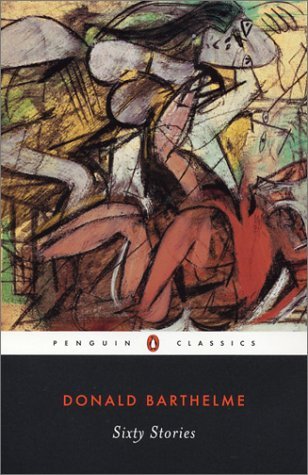 I can get past the workshop-feedback-editor-in-my-mind for my own writing.... but somehow, those editors are arguing with themselves when I'm reading published fiction.... and good published fiction at that. Case in point: I recently picked up a collection of Donald Barthelme's short stories (Sixty Stories, after which I look forward to reading Forty Stories). They're weird and strange and intricate and experimental and beautiful. An example of some of his stories (and some of my favorites): "The Zombies" about the community of good zombies and bad zombies; "I Bought a Little City" about buying the city of Galveston, TX and shaping it into the shape of the Mona Lisa visible from the air; "The Great Hug" about a man with symbolic balloons and the one woman who can pop them. I'm not a fan of all of the stories, though.... some seem needlessly experimental and too despondent for my liking.... but there are a handful that are masterworks of fiction, and perfect examples that prove to me that one can never run out of things to do with fiction, even when sometimes it seems like it's all been done before. My favorite so far: "The Balloon", haunting and gorgeous; a story about a guy that inflates a giant balloon over New York City, covering some eighty square blocks. The narrator talks about how people in the city take day trips walking over the balloon, or meet on the street at certain places where it dips to the ground or touches against the buildings. People attach paper lanterns on the underside and have block parties. The end is a revelation, so bittersweet and touching.... why did the guy inflate the balloon? Because his lover left him, and it was nothing more than a symbol.
So, the point I'm getting at: if Barthelme's stories were taken into a workshop, they'd be ripped into confetti. There's no way that stories like this wouldn't be eviscertaed on the spot in a snarling workshop. His style is sometimes slapdash and fragmented. His narrators wander and sometimes misdirect. Even I come across some things that I think could have been written more clearly or differently, but in the end his stories are viewed as successes and loved by many. So, if stories like his won't pass the muster of workshop, what makes good fiction then? Is that even the point of the workshop? The goal is not to be validated by your peers, but certainly that helps.... and I think sometimes the want to be recognized rather than assisted eclipses the whole purpose.
So, when I'm reading fiction, I no longer have a grasp on what's good or bad. Everybody has different taste.... so when in workshop they pontificate their tastes onto your work and therefore provide negative feedback....? What are you left with? Does your taste even matter? What about when someone turns something into workshop that (to me) is so clearly poorly written and scattered, yet they get a gentle read from the class? People gush and glow, and I'm left wondering "WTF?" Meanwhile the work that I find very strong gets ripped apart with jagged teeth. Maybe this should be of consolation for my own writing, but somehow it isn't.
So.... the story I'm writing next is weird. Inspired in part by Barthelme.... but I know it's going on the chopping block. For some reason I've been writing weirder stuff as of late, straying from the traditional realism I used to write in all the time. I'm looking forward, in a way, to the summer.... to clear my mind of workshop so that next year I can jump right back in with a refreshed attitude. Don't get me wrong: I like workshops and am looking forward to next year's, but I need the break. In the mean time, I'm gonna keep reading published fiction, and try to rid those workshop voices out of my head for that, too.
Monday, April 10, 2006
24: predictability will be the death (at least creative death) of you
Further proof that the writers of "24" are suffering from delusions of grandeur:
But I think you could make the argument that the outcry over Tony's death, over Edgar's death, over Palmer's death, in a way, means we did the right thing. The purpose of the show is to appeal to and produce emotion in the audience, and clearly we have.
As far as their (i.e. executive producer Evan Katz's) treatment of the reliable bloodbath of established characters, he spits the same useless easy-way-out shit and calls it sugar:
....we really felt last year we had gone as far with David Palmer as the character could go.
and this, too:
In terms of Tony, we knew that was coming. That was a long time coming. We felt we had told the stories we could for his character.
Uh, guys.... let me say *again* that just because a character has "run its course" in your eyes does not mean that you should go and kill them off. Why not write them out in a unique and open-ended way and actually challenge yourselves to do something interesting with the character? Something that doesn't involve a bodybag for a change. I've said it before, but here you get it again: if a "24" movie is in the works, wouldn't it be nice for the characters we haven't seen in awhile turn up for a big hurrah? That would be certainly surprising and satisfying. Too bad they're all dead.
President Palmer's reaction is similar to mine. I'm glad I'm not the only one. However, his attitude might be tainted because he got a pink slip and I didn't.
That’s the result of destroying these relationships [between Jack and the other killed-off characters]. You have to constantly stunt to get people to watch, because every relationship that Jack has had, from Season 1, all those people are gone. It puts this man against the world thing in, and it becomes a bit cartoonish, not plausible.
 All this said, I'm not so sure why there was such an outcry about Edgar's death to begin with. He was a missed opportunity last season (he should have gone bonkers), I think the writers realized that, and they didn't have anything interesting for him to do this season except die. More proof of what the writers like to do when they think the character has told all the stories they possibly can. Dear producers: you're getting predictable.
Yeah yeah yeah, I'll be tuning in tonight.
Thursday, April 06, 2006
from dirty libby to delicious libby

 She's spent too much time in the background as second-season-addition Libby, the clincial psychologist (or is she?), on "Lost".... but on yesterday's episode, though, we finally got our treat. And, a pretty awesome reveal at the end (to your left) regarding her character.... turns out she happened to be in the loony bin with Hurley at the same time, but they don't seem to remember each other (....or at least Hurley doesn't). This is a step up from the usual pretending-to-be-tricky character connection crap the the writers have too much fun with. I have to admit, I'm afraid "Lost" might turn out to be a grand exercise where we find out at the end that the writers were flying by the seat of their pants the whole time. They've gone out of their way to seed so many little details (hardcore viewers are calling them the DVD-friendly term "Easter eggs") in their episodes, and I'm starting to worry if they're ever going to connect the dots. I'm actually interested to see how this one with Libby and Hurley plays out.... assuming it does. This twist was provoking and satisfying.... a trait as of late where narrative shock value in TV tends to miss the bar.
When I have my own TV show, I want her on it. Just added to the ever-growing dream cast list.
Is it bad to imagine the actors who you want to play the roles you write?
Wednesday, March 29, 2006
tread lightly, film industry, when bringing your junk to San Francisco
"The Evidence" is a new television drama trying to be too many things at the same time. It has all the colors and poppy editing of "CSI", it has the gritty cop-and-partner edge of "Law & Order", and just about every other trope of your typical episodic criminal justice procedural you can find. Because all these things are so easily identifiable, and because of unchallenging writing, "The Evidence" is trying too hard, and at the end of the day it just isn't a good TV show. This is not it's highest crime, though. The show takes place and is shot (to some extent) in San Francisco. The only reason for this (evident after these first two episodes, after which I will not continue) is because of its scenery, its diversity, and all the other things that makes San Francisco seem like a good place for a show to take place in. It's all-too-clear that the city is being used and not utilized.
A show like "Grey's Anatomy" for instance, uses Seattle delicately; it acts as an interchangeable city. The show could take place anywhere else in the country, and the scripts respect this.... they're not going out on the streets or laboring past landmarks in every episode because it isn't necessary to do so. However, Seattle provides a comfortable backdrop, and in some respects pays respect to that city as a pleasant place for the story.... and that's where it ends. Another somewhat recent medical drama, "Presidio Med", albeit short-lived, treated San Francisco similarly as "Grey's Anatomy" treats Seattle; if they can't use the city as a focus, they use it only as establishing-shot setting.
I absolutely do not object to the film/television industry choosing to shoot in San Francisco, particularly because it brings revenue to the city and thereby helps the toruism industry. In fact, San Francisco has seen a decline recently in film industry interest.... I'm not so sure "Nash Bridges" counts. What I do object to is using the city (er, The City) as a dumping ground for a crappy unremarkable procedural show like "The Evidence" in the guise of paying respect to it. This show is trying so so hard to screech past every San Francisco landmark (including CGI-ing shots of the Bay Bridge flying over, in the wrong direction no less, supposed-waterfront locales that the Bay Bridge happens to be nowhere near), it cheapens the effect. Characters say useless throw-away lines such as "...from here to the Farallones" and mention the Glen Park precinct of SFPD.... they even created a ficitonal San Francisco Gazette for a crossword puzzle as evidence, feh. When we first meet the two leads in the pilot, they are playing golf on some fictional garbage scow/wharf with the Golden Gate Bridge sailing behind them, kicking smashed aluminum cans and walking past dirty chain link fences and panhandlers. In reality, where they chose to film (Crissy Field), garbage and metal fences are nowhere to be found.... instead there are beautiful sand dunes and grassy lawns, usually with joggers and stroller-pushing moms enjoying their afternoon by the bay. In their disgusting attempt to make San Francisco seem gritty while getting that landmark money shot in the background, they wanted to up the grunge factor. Why not shoot in Hunter's Point, then.... or the Tenderloin? I have a feeling that the producers are averse to having their actors witness homeless transsexuals peeing on street corners. Now that would be gritty television.
What's the point of the show? It's not about San Francisco, it's about "the evidence" of crimes in San Francisco that could just as easily be found anywhere else in the world.... why not set this show in Houston, St. Louis, Atlanta? The producers sat around some mahogany table and decided to choose somewhere sexy, and somewhere that stands out.... and because New York is overused, they threw the dart at San Francisco.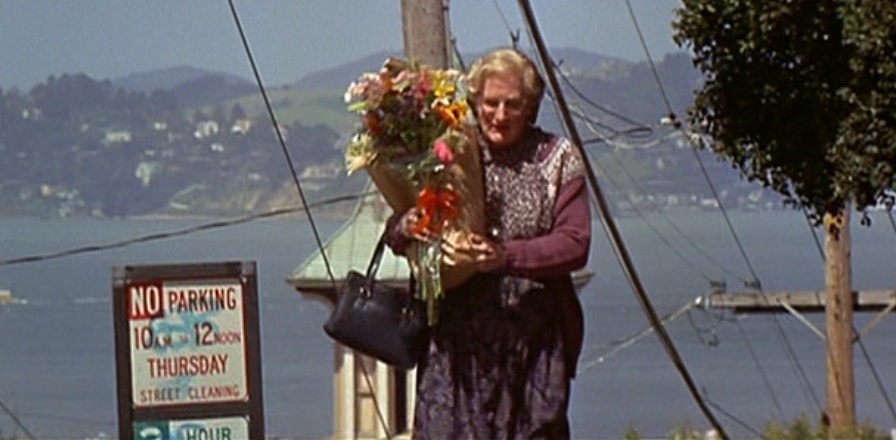 I'm no expert on the history of San Francisco in the movies and TV.... but others have come and succeeded, using San Francisco as the right kind of backdrop. Mrs. Doubtfire (1993), for instance, is almost a love letter to San Francisco, taking advantage of its ups and downs and letting the scenery shots come naturally and not be overused. This may be because both the director (Chris Columbus) and the star (Robin Williams.... why wasn't he Oscar nominated?) are San Franciscans. They filmed the movie with love for the city in mind, not as some any-city with sexy scenery.
Maybe I've contradicted myself above, or made the argument a little muddled. I have a high standard for San Francisco (could you tell?), and it's disappointing when Hollywood misses the bar. This is my own thing, though.... clearly I'm sensitive, but only because I love The City so much.
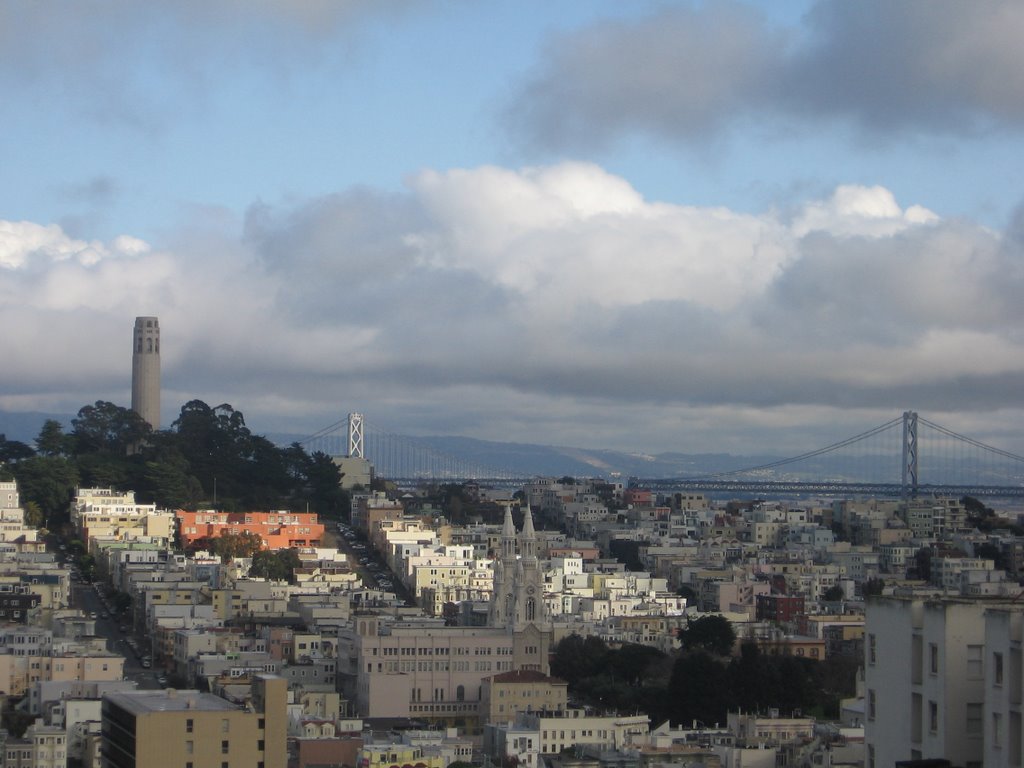 my old neighborhood.... *sigh*
Tuesday, March 28, 2006
say good-bye to these
Today (yesterday?) was a a sad day for those who love quality television.
Rest in peace, "Arrested Development".... The three seasons we had were just not enough. There were so many more places to go. Here's to hoping that joke about making it a movie in the series finale was not actually a joke.
And now a question: If a show is so beloved by fans, why decide to end it when there are other options to keep it on the air (re: Showtime) on the table? Can't one argue that keeping a show on the air for the sake of the fans (and there are many of us indeed) is worth keeping it on the air?
Tuesday, March 21, 2006
24: another one bites the dust
Never has there been as trigger-happy a show as "24". This season, the writers decided to pull out all the stops and start slaying main characters left and right. My guess is that this was in an attempt to be shocking and unforgiving, a trait the show is known for. I'm disappointed though: the show wears it's badge of "unpredictability" with pride, hence the unpredictable has become predictable.
Last week marked the demise of one of the remaining characters that has been around since Season 1, stabbed in the chest with a syringe full of painful death serum. The week before that they killed off the big-lug cranky-yet-lovable analyst by having him miss the chance to get safely away from a room filling with nerve gas. It seems that in each season a main character gets wiped off the opening credits because their character has met with death.
When a main character is killed off, it (should) signify a major turning point, a place from which the story cannot return, thus forcing the course of the story to proceed in a new and uncharted direction. I think this goes for any kind of long-form storytelling, not just television series, but novels too. I think killing off important characters is a powerful, challenging, and potentially daring move to make in the course of a series.... but "24" has cheapened the effect dramatically, and I feel that the writers have abused a complicated trick. "24" moves at such a fast clip (each season getting faster and faster, hence upping the suspension of disbelief required to stay tuned) that there seems to be no time for the deaths of main characters to affect the story. They are seen as casualties only, victims of the Threat At Hand and swept aside with sheets over their cooling corpses. It seems that the Threat At Hand is unstoppable until it is inevitably stopped in the last episode of the season (duh), and everything that got in its way is left forgotten.
I think that killing off a main character can be an incredibly useful device, particularly in the way of shock value. I think "24" blew its shock value wad back at the end of the first season when Jack Bauer's wife unexpectedly bit the dust (let's not even consider this a spoiler anymore: to the rest of you, rent yourself the series and start watching). That death was a great point to launch from into the second season, thus changing the relationships of the characters and altering how the story was told. Shock value is a really important trick too, especially in the way of waking up the viewer.... unfortunately, it's the kind of trick that shouldn't be overused. With Jack's wife meeting her maker so unexpectedly, "24" picked up a reputation that "nobody is safe".... which worked for awhile. Now that we're in the trenches of Season 5 and three fairly important characters to the series (not necessarily to this season) have been killed off in the last three episodes. That "nobody is safe" mentality has lost its edge which in turn takes away from ther whole point of the surprise.
For really good TV, and I mean quality writing, it's important to challenge both the story and the viewers. The big death at the end of Season 1 did just that: challenged. In Season 3, two of "24"'s characters (in my opinion, the most interesting characters they've ever had) also met their end by death. I suppose that their deaths were unpredictable to some degree, but not challenging to the story. I can understand needing to write them out for awhile, but killing them off prevented the viewer from filling in some blanks that had been left open. With the recent deaths too (including those main characters that were axed in Season 4), I've been reading that the writers of "24" have said that the reason why these characters have been killed off was because they've reached the end of what they can provide the story. Why is it necessary to kill them all off, then? A more challenging route would to be find a plausible (and equally as shocking) reason to write them out of the story without putting such a final end to them. Besides, this always leaves the door open to bring them back and surprise the viewer in a completely fun and different way.... particularly if they bothered to even leave a complex villain alive long enough, this could be used (and they did, in Season 3) to great effect.
"24" must pride itself for being a bloodbath, I guess. As I said above, the killing off of a main character is a trick that should be used sparingly and necessary only when the story must change because of it. Season 5 opened with two well known characters shot by sniper (1) and then killed in a car bomb (2), but only one of those killings was necessary to launch the action of Season 5, and the poor character who met their end under a burning car was an unnecessray casualty. Not one death of the handful of main characters from "24"'s roster since that of Jack's wife from Season 1 (and the death by sniper bullet at the beginning of this season) has served a story-altering principle. They seem to be scuttled out of the way as an all-too-convenient way for the writers to move on; this wouldn't be such a big deal if it weren't such a disappointing pattern. A main character should not be killed off for the sake of shock value (like the two most recent from this season); it should challenge the story to evolve and not to wash the hands of writers who ran out of creative capital for them.
I think, in the end, "24" is changing. I'd be more angry about this if it didn't seem evident that this is the intent of the writers, so therefore I must let it be. A lot of the repetition and impulsiveness that the show has started to rely upon is it's own formula, the formula it's adapted for itself and has grown comfortable with now five seasons in. What started off as a solid serial television show is starting to break into a hybrid form of episodic seriality.... meaning each season is kind of episodic, rather than each episode. Episodic television delivers stories from beginning to end within an episode, and this trend is not broken as the series continues.... viewers tune in because they like having the sense of stability that each episode provides them, that nothing will irreversibly change or characters will not act out of their roles. It seems that "24" has taken this model up a notch to the season-long level; I guess viewers are most interested in the show because they like having the stability on the season-long level.... we can expect the same things to happen each season because that is the episodic quality the show has taken on. These writers have axed some of the best characters (and actors) that they've created for the show; I guess this suggests that they want a revolving door of continuous characters.... this only furthers the concept of the season-as-episode. I certainly tire of the all torture-pornography, all the slippery bad guys with an entire alphabet worth of masterminded backup plans, all the times Jack Bauer comes this-close to getting the information he needs before his informant gets killed. It seems though that this is what the viewing public likes and wants, and hence "24"'s ratings are steadily rising. And I keep watching.
Monday, March 20, 2006
collision of two worlds from the television pantheon
You know that feeling when you're watching a movie or a TV show, and suddenly you recognize an actor from another beloved show or movie? That's kinda cool, right? Unfortunately, I tend to be a junkie for such things, sometimes turning into a strange human-imdb.com hybrid sitting next to whatever friend happens to whisper "where have I seen him/her before?" in a movie or while watching TV.
It's even more exciting when a character pops up in a current beloved TV show from another beloved TV show of the past, thus creating a golden moment for the geeky viewer (me). For the actor, it's just another job. For me, it's a collision of two worlds, damn it.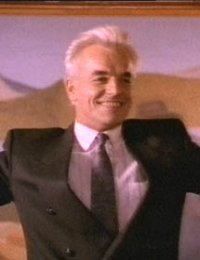 Anybody notice who Vice President Hal Gardener is this season on "24"? The actor is Ray Wise, and, that's right.... he's Laura Palmer's dad Leland from "Twin Peaks" (!!!). This isn't exactly new news (his first appearance on "24" was two weeks ago; read the link only if you happen to know "Twin Peaks", because it's too spoiler-y, even if the show's been off the air for 15 years). This guy's performance on "Twin Peaks" was indelible enough (i.e. moving/disturbing enough) in my childhood, having watched the show in awe and fascination and near-terror, that I pick him out in other things he's popped up in.... yes, including an episode of "Star Trek: Voyager" from seven or eight years ago, under strange head makeup. He also had a plum role (and if it were in other years, maybe even oscar-attention-grabbing) as a tortured news anchor in Good Night, and Good Luck (2005). Not that he's taking the Hollywood circuit by storm or anything, but because he had quite a pivotal role on one of the most important television shows ever made, he certainly has a secure place in television history (no matter what kind of geeky history I've conjured up that might be).
I tend to identify "Twin Peaks" alumni in whatever TV/movie media I happen to notice (it's a sickness).... Most recently: Piper Laurie ("I can see your dirty pillows!") played some old chick last year on another indescernible episode of "Cold Case"; as another vice president, Windom Earle channeled Dick Cheney in The Day After Tomorrow (2004); Lara Flynn Boyle got blown off the roof of a casino on "Las Vegas"; Heather Graham got a swift kick in the ass when her "Emily's Reasons [whatever]" sitcom tanked; even Agent Cooper has a lead role (and a lot of hair) on ABC's "In Justice", currently serving in a Friday night wasteland timeslot.
Monday, March 13, 2006
Nabokov for beginners like me
 My first foray into the fiction of Vladimir Nabokov comes with Pale Fire. I've heard a lot about this guy. Both Lolita and Pale Fire have found their way onto quite a few lists of the best that English literature has to offer. I've heard about his style, his effortless command of language, his dizzying control of word-play, his mastermind use of vocabulary. I've heard nothing but good things about his writing. One thing I didn't count on, though, was his capacity to shit on his reader.
Pale Fire, to some, is a joyous romp, a delirious inside joke that is just so clever, how could one not be enthralled by it? It's basically a first-person commentary on a 999-line poem written by a fictional poet just before his untimely death. The narrator is obssessed with the life of this poet, and his massive commentary on the poem digresses back and forth between the narrator's fantasy (or is it?) world and his ultimate jealousy of the success of his poet friend. It's clear that Nabokov had something big in mind for this book, and the construction is so intricate, it's clear the guy definitely has the chops to be as praised as he is. The writing, for the most part, is lyrical and beautifully honed. The problem: the narrative is so aggressive, so clear that it's playing around with something (and what feels mostly like the reader), that I'm left in the cold. It's certain that some (most?) readers will be left in the dark, and I'd have a little less of a negative aftertaste if I didn't feel that the author was laughing at those who don't catch on. There are just too many subtle in-roads to get to the big inside joke.... they are there, but how much work am I expected to do? The layers are so deep that I don't even know where to begin.
This brings up an interesting question about storytelling in general. How much do you want your audience to work for the payoff? At what point do you alienate them, having made them work too hard? At what level can a story withhold information to tantalize yet entice the audience to remain invested? How does the audience know when the author/auteur is wanting them to solve the puzzle, and how do they know when the author/auteur turns their nose up at them?
It's interesting that my opinion of aggressive storytelling takes a different stance when it comes to movies. I tend to like the movies that take the non-traditional approach (three-act struture be damned!) to storytelling. I like picking apart the story to find how all the pieces connect, I like being able to do some of the leg work on my own. As far as successful examples of aggressive narrators in film, one can look to those written by Charlie Kaufman, the soon-to-be-annointed patron saint of screenwriting. I love the feeling of hard-fought realization when I solve the puzzle box of the story.... so when do I reach the point that I feel I've been messed with rather than encouraged?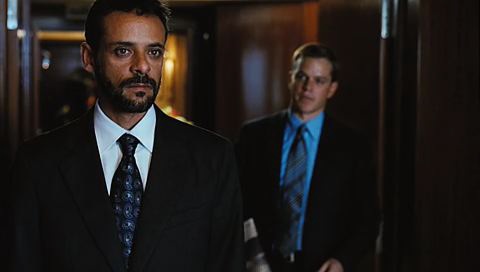 A recent example: Syriana (2005) uses an aggressive narrative, but only in how the story is delivered.... each scene is presented quite traditionally, actually, but how the scenes and storylines connect creates a massive webwork that definitely falls on the non-traditional side of storytelling. The trick is that you have to let the film wash over you as it unfolds; it's not designed to be picked apart scene by scene, but rather designed to complete a picture of the whole when it is all said and done. I think that this strategy worked very well for the film, particularly in the face of its scatterplotted story; it was the only way the story could be told. This isn't exactly the best example of a puzzle box movie, but it has similar facets.
Pale Fire is much the same way, though.... while I was reading it, I was hoping for the wash-over effect to lead to the lightbulb going off in my head. Instead, I was left at a pitiful stage of brownout. My reading of it wasn't unenjoyable, exactly, but in the end there were just too many subtleties for me to try (and ultimately to want) to hone in on. I'm afraid that I fall in the camp of those who are not in love with Nabokov's writing, but maybe I should pick the book back up in a year and give it another go now that I know what it's trying to do. Maybe his other beloved works like Lolita and Pnin will prove me wrong?
Monday, March 06, 2006
a Crash course on bloated oscar hype
 So, am I the only one in the world who didn't think Crash was that surprising a win for this year's Best Picture Oscar? Sure it came out quite early in the year, but it certainly wasn't dead on arrival come Oscar night, like many nominees stretched across the categories. Everyone was still talking about it.... it did, after all, make it on quite a few lists of the best films of 2005.
The media is having a field day calling Crash a surprise win. They're probably aching to call something a surprise because all the other high profile catgeory winners were unabashedly not surprising. Crash was just as polarizing (some people really loved it, others really hated it) and just as "controversial" (ugh) as the expected frontrunner, Brokeback Mountain (but hey, Ang Lee won Best Director, and that idiotic guitar score sailed its was to winning Best Original Score). They're both good dramas, but for very different reasons: they're telling different kinds of stories, they're trying to do different things. That said, I will argue that a movie like Crash is a more difficult feat to pull off, given its labyrinthine interconnections and mammoth cast.
There have been bigger upsets in the past (like Shakespeare in Love taking out Saving Private Ryan in the parking lot for the Best Picture Oscar of 1998), so to make this one look like a shocking event is just too self-indulgent. Thank god this awards season of just-okay movies is finally over.
UPDATE (03/07/2006): Roger Ebert zeroes in on this issue too, and doesn't disappoint.
Friday, March 03, 2006
oscar retribution for all the wrong reasons
As far as film acting goes, I think it might be too much to ask that the Academy Awards actually award the best performances of the year. It's hard enough justifying the quality of all five nominees in comparison with those one or two who were snubbed. The sad reality is that the awards circuit is blighted with campaigns and advertising, thus obscuring great performances in favor of popular performances. The Oscars have certainly gotten better at this in recent years, but still nominees pop up and they stink of for-your-consideration campaign afterbirth.
I too get caught up in the awards-season furor, partially because I'm a movie junkie and because I just can't deny the starstruck appeal of the whole thing. I don't think that there is any real way to quantify what makes the best five performances of the year, and then from that selecting the best performance of the year. This doesn't stop me from getting fired up when a very deserving actor gets snubbed of a nomination in favor of a dismal or overhyped performance by another; same goes for an actor winning the award in favor of the truly deserving.
This year has been relatively lackluster as far the awards circuit, for two reasons, simple and complicated. 1) simple: competition has been light because the films this year have been slightly underwhelming. 2) complicated: the disturbing mass exodus of countless awards shows bestowing the same categorical awards on the same people. It seems with each new year comes a new awards show designed to further litter the mantles of it-actors, so it's no wonder that the Oscar goes to the same actor that's picked up fifteen other awards for the same performance. Last year's Academy Awards were no surprise: all four acting prizes went to the four expected actors. The last three or four years have been relatively the same. This year is shaping up to be even more unsurprising. What's the point of watching an awards ceremony with the grandiose "and the winner is" envelope-opening when you already know who is going to win? The Oscars have lost their punch. I haven't been amazed by any of the films I saw this year. I' did see a lot of good films, many of which were nominated for Oscars, but none of them were show-stopping for me. Apparently I was only one of ten people who saw Stay (2005), which I thought was beautifully filmed and was quite intriguing and artful (and worthy of some Best Editing awards attention).... and apparently I was one of six who probably thought of it that way.
 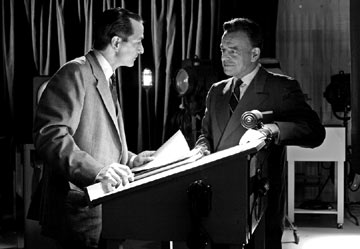 Out of the five Best Picture nominees for 2005, the one I enjoyed most was probably Good Night, and Good Luck, mostly because it had all the right pieces of a quality film (solid screenplay, strong performances, beautiful direction, art direction, cinematography, etc), and it gained my complete trust. The other four are all good movies (and I would recommend them), but they definitely creak under their own weight.... in some ways, they're too big for their own good, and not as tight and complete as they could have been. The fact that this year's films have been so underwhelming is probably why a movie like Brokeback Mountain is masquerading like it's an unsurpassable achievement in filmmaking, which it isn't. Brokeback Mountain is flashy only because of its subject matter, thus camouflaging notable strikes against it; the screenplay oozing with sentimentality, for instance. Ultimately, it feels like the kind of movie that was made to win awards.... and folks, this isn't why movies should be made. But, because of it's unstoppable amount of press, it will walk away with the Best Picture trophy on Sunday night.
As far as winning Oscars seem to go, the Academy tends to like to make up for its mistakes. This furthers the culture of not awarding the best performance of the year, but rather making up for the lack of an award or nomination in a previous year. Usually in cases like this, they honor the lesser performance with a nomination or an award because the more deserving performance was overlooked. Case in point:
* Russell Crowe, nominated for Best Actor for The Insider (1999), picks up a pity win for the far less-superior (and downright overhyped) Gladiator (2000).
* Nicole Kidman, nominated for Best Actress for Moulin Rouge (2001) lost to Halle Berry (why?!).... so they made up for it by awarding her for The Hours (2002). This had an unfortunate domino effect, though: Kidman's performance was great (category fraud alert: it's probably closer to a supporting role), but all the attention of that damn prosthetic nose eeked out Meryl Streep of a rightful nomination for the same movie, and robbed the actual Oscar out of the hands Diane Lane for Unfaithful (2002) or perennial "I can't believe she didn't win!" favorite Julianne Moore in Far From Heaven (2002).
* Paul Giamatti, mysteriously not nominated due to gross oversight as Best Actor for Sideways (2004), picks up his requisite pity nomination as Best Supporting Actor in the throwaway Ron-Howard-awards-baiter Cinderella Man (2005). * Naomi Watts (those of you who know me already know where this is going) picked up a Best Actress nomination for 21 Grams (2003) because the Academy realized too late that they overlooked perhaps one of the greatest performances of hers, let alone of film history, in Mulholland Drive (2001).
And then, sometimes popularity and hype of an actor or performance is so strong that there's no stopping the award from coming.... they just steamroll their way to the podium on recognition alone. See Jamie Foxx's continuously-replicating and thereby nauseating acceptance speech as Best Actor for Ray (2004).  See Julia Roberts winning Best Actress for Erin Brockovich (2000) (a performance that I liked and was certainly deserving of the nomination, but ROBBED Ellen Burstyn of her rightful Oscar for Requiem for a Dream (2000)). And, see this year, when Reese Witherspoon will pick up her Best Actress Oscar for Walk the Line on charm alone.
There are so many others. Can you name a few?
In the end though, like so many things, I gripe because I like it all too much. Past indiginities will not stop be from holing up in my apartment with frito pie and seven layer dip and a bottle of wine to watch the Oscars on Sunday night. Anybody wanna join me?


